BOSE | Soundlink Plus
Some links in this post are affiliate links. As an Amazon Associate, Filtered Bliss earns from qualifying purchases. This does not affect the price you pay.
I TRIED THREE BLUETOOTH SPEAKERS. ONLY ONE SOUNDED LIKE MUSIC.
My Bluetooth speaker died. A moment of silence, please, for the Anker Soundcore Boost – a speaker I liked enough to recommend here on the site, and one that Anker has since discontinued. Which meant I had to go find a replacement.
Seeing as they don’t make my old one anymore, I figured it was time for an upgrade and not just a ‘let’s find the new version’ kind of thing. Time to spread my wings from Soundcore – a perfectly good double-digit speaker – and step up to the next tier. The internet had me sold on JBL in particular, so that’s where I started.
But first, some context: I work in pro audio. I’ve spent most of my working life in recording studios and listening critically to sound for a living. I know what balanced audio sounds like. I know what it doesn’t sound like. I also want to state upfront that I understand the physics – a small speaker can only do so much at a certain price point. I’m not expecting miracles, but I do expect competence.
What I was not expecting was the absolute circus that followed.
THE SEARCH
Searching Amazon for “Bluetooth speaker” is a fool’s errand. There are countless options, and every one of them promising the world with nonsense marketing phrases – bass extension, distortion-free DSP, “intelligent EQs for poolside listening,” and let’s not forget the varying levels of ruggedness and splash resistance. Sure. Fine. I guess some of that matters.
But if you’re just looking for a speaker that plays music and doesn’t leave your ears feeling like they’ve survived an all-day Zoom call? The options are far narrower than the market would have you believe.
ROUND ONE: THE JBL FLIP 7
I started where most people probably start. The JBL Flip 7 – similar size to my old Anker, same product category, about $150. Solid brand. Should be fine.
It wasn’t fine. It felt well-made, sure. Heavy. But the bass was virtually nonexistent. When an EDM kick hits, this thing simply doesn’t thump. It goes tick, tick, tick, tick like a metronome with ambition issues, and you can tell it’s trying to trick your ears by boosting the low-mids. The drivers are tiny, and physics applies. I know this. But neutral, balanced sound – the thing I actually cared about – was nowhere to be found.
ROUND TWO: THE JBL CHARGE 6
So I thought: bigger JBL, more money, problem solved. The Charge 6 has an MSRP of $199 and touts AI-powered audio processing – some sort of DSP that adjusts speaker characteristics as the volume changes. Supposedly to make your music sound good. Or at least to prevent it from sounding bad.
It arrived. So I dutifully charged it, connected it, and … awful. Not close to balanced. If anything, it was actually worse because the sound was that much more colored. Not close to neutral. Just … bad. Two hundred dollars-worth of bad. At this point, I’m two JBLs deep and zero dollars closer to a speaker that sounds like the music I know and love.
A WORD ABOUT REVIEWERS
I want to tread carefully here, because I don’t want to be that guy who claims everyone else’s ears are broken. But I have questions.
Working in music teaches you one thing above all else: your ears are the instrument. You learn to hear imbalance the way a chef tastes over-salting – it becomes instinctive. So watching review after review enthusiastically praise these JBL speakers for their sound quality felt surreal. Kinda like reading restaurant reviews where everyone raves about a dish that’s clearly burnt.
What seems to happen is that volume gets conflated with quality. Can it fill a backyard? Can you hear it across a pool? Great – five stars. But loud and good are not synonyms. In more than one head-to-head between JBL and the Bose I eventually landed on, I heard something to the effect of “all things equal, I’d choose the JBL.” Hilarious. All things are not equal. Not even a little bit.
I’m not tone-deaf to price – the Bose costs more (MSRP $269, but $229 on Amazon). But the gap in quality is so vast, so immediately obvious, and offers so much more value for money in the medium-to-long term from a listening perspective that calling it a trade-off feels generous. You just get so much more speaker for that extra money. It’s not close.
THE BOSE SOUNDLINK PLUS
By this point I was so done. A week of reading marketing copy and watching people on the internet be confidently wrong. So I turned to Bose.
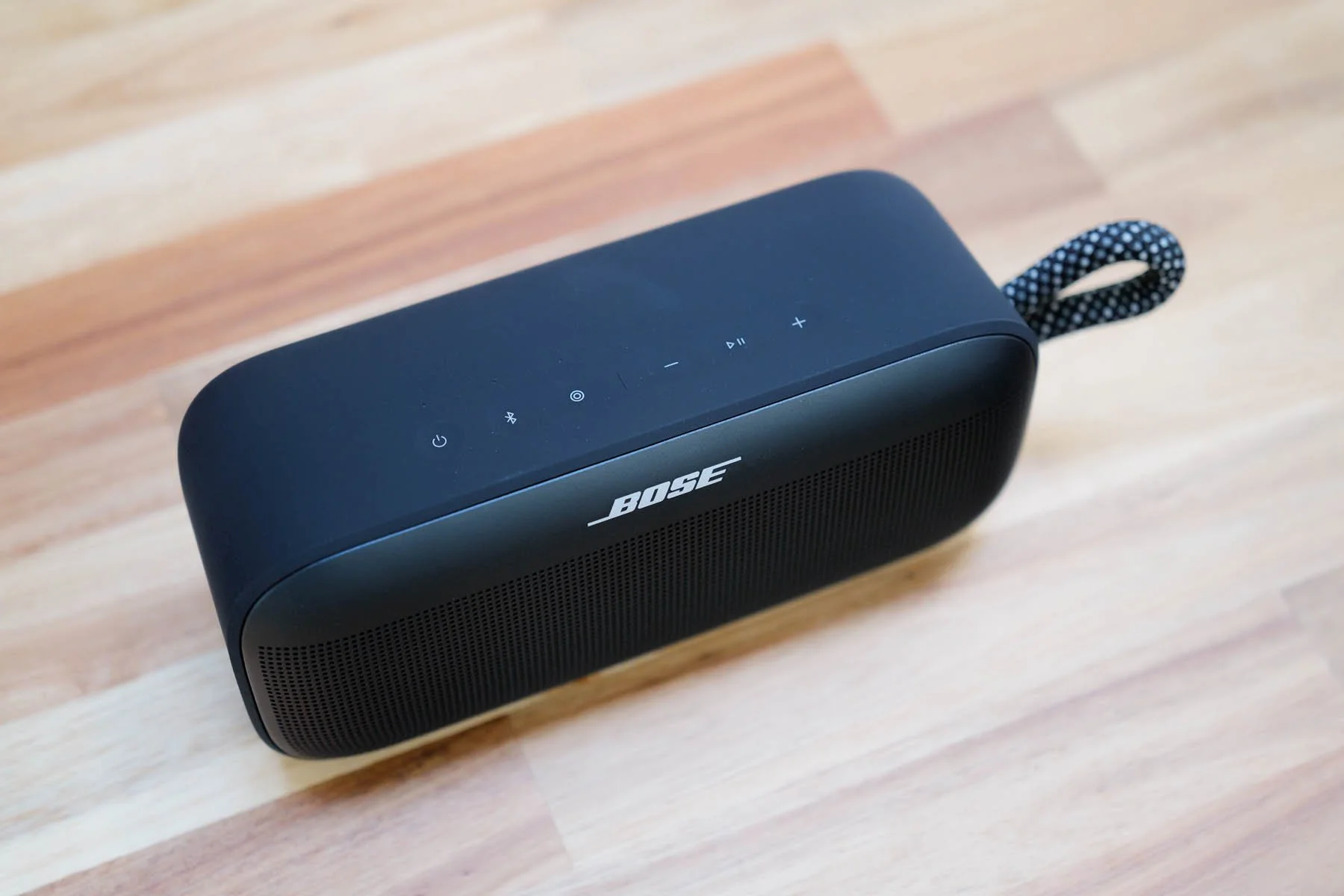
The Bose SoundLink range has three tiers: the Flex, the Plus, and the Max. I went with the Plus at around two hundred and thirty dollars. And honestly? I’m blown away at how good this thing is.
Out of the box – no app, no EQ tweaking – this speaker sounds like the music I know. Like I said, I work in and with music. I work with people who make music. I make music. And I hear all of that material in treated rooms on tuned reference monitors. When I play it through the SoundLink Plus, it sounds like itself. Neutral and balanced in a way that none of the JBLs even attempted. It sounds as honest as an (approximately) eleven-by-four-by-three-inch box can be – which turns out to be remarkably honest.
You can listen to this thing all afternoon without the creeping fatigue you get from poorly tuned speakers. You know what I’m talking about – that vague, hard-to-place discomfort, like Zoom-call brain but for your ears. The Bose SoundLink Plus just doesn’t do that. It plays music, and the music sounds right.
Earlier I mentioned how the Flip 7 feels heavy, and how that perceived quality is partly just battery weight. The SoundLink Plus is heavier still – just under three and a half pounds versus the Charge 6’s two and change – and I think it’s worth asking where that extra weight is going. Some of it is battery, sure. But in speaker design, mass actually does real acoustic work – it has genuine purpose. A heavier, more rigid enclosure resists the equal-and-opposite force that a driver generates every time it pushes air forward – Newton’s third law, basically. A flimsy cabinet vibrates with that energy and colors the sound. A dense one absorbs it. On top of that, larger drivers need beefier magnet assemblies to control the cone properly, which is what gives you tight transient response – it’s why a kick drum sounds like a kick drum instead of a loose, low-frequency ‘flub’. And passive radiators, which Bose uses to extend bass response, are essentially weighted membranes, which are heavy by design.
Point being: the SoundLink Plus isn’t just heavier because it’s got more stuff in it. It’s heavier because some of that mass is doing the work that makes it sound the way it does.
DESIGN AND BUILD
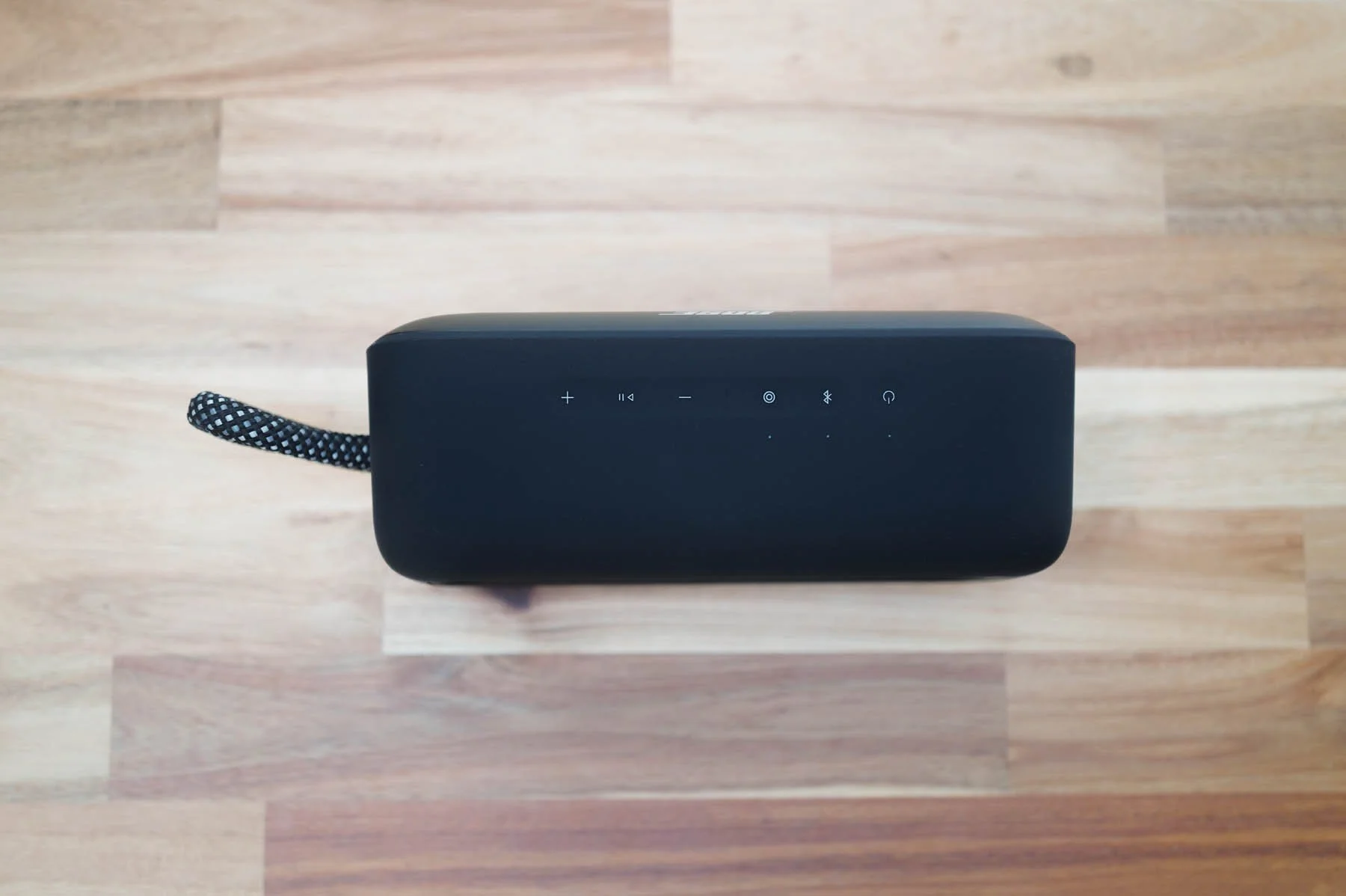
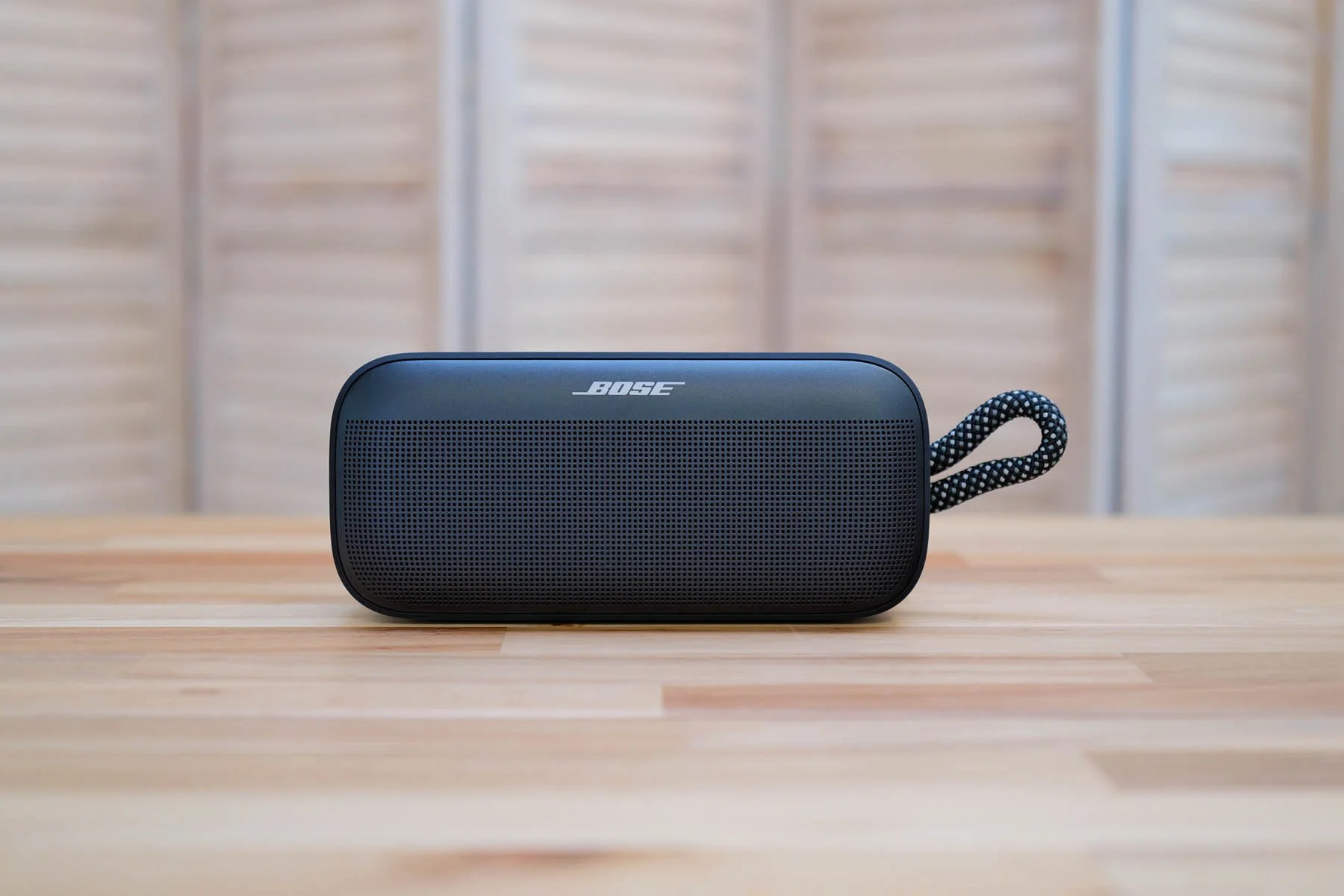
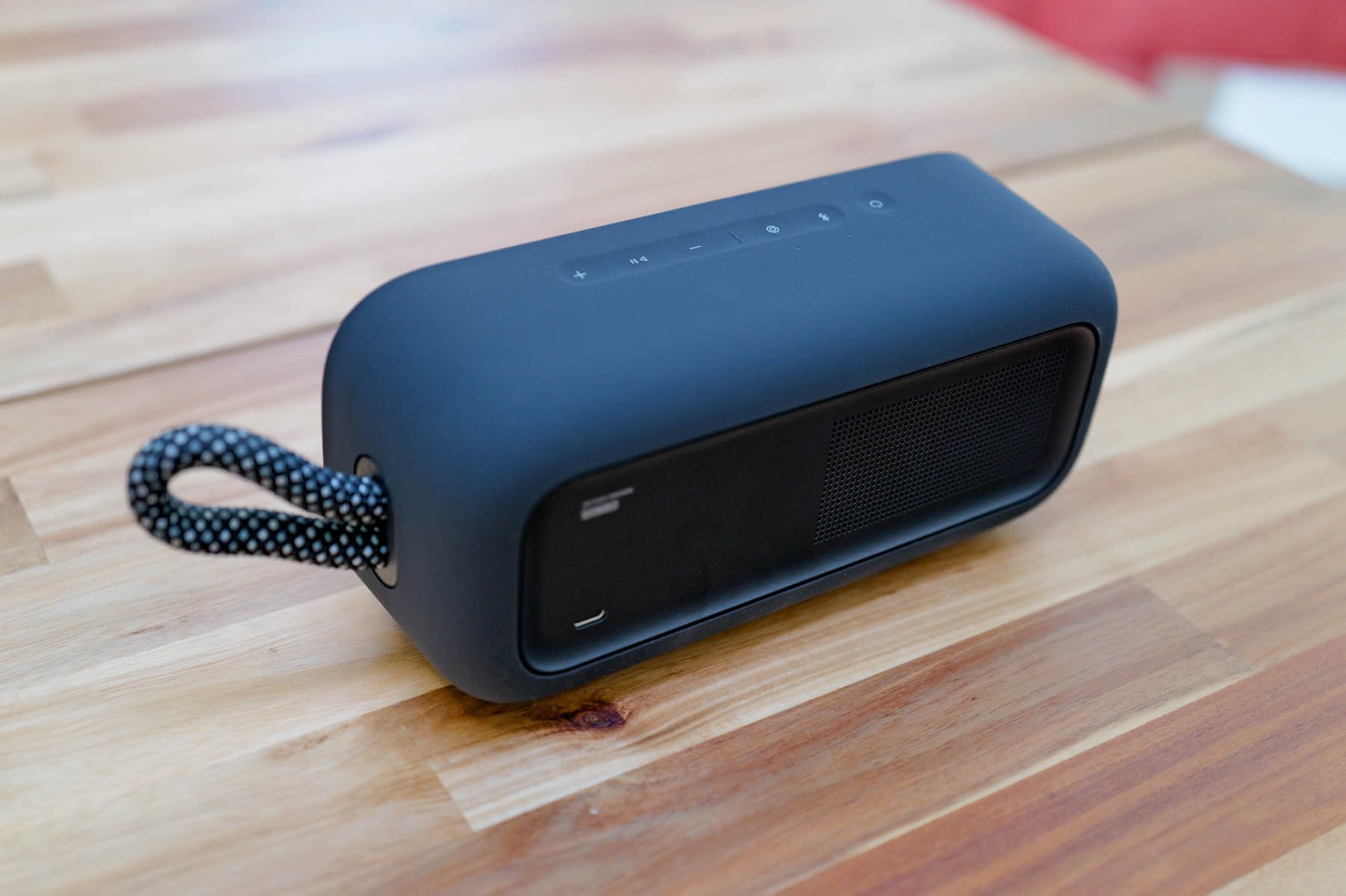
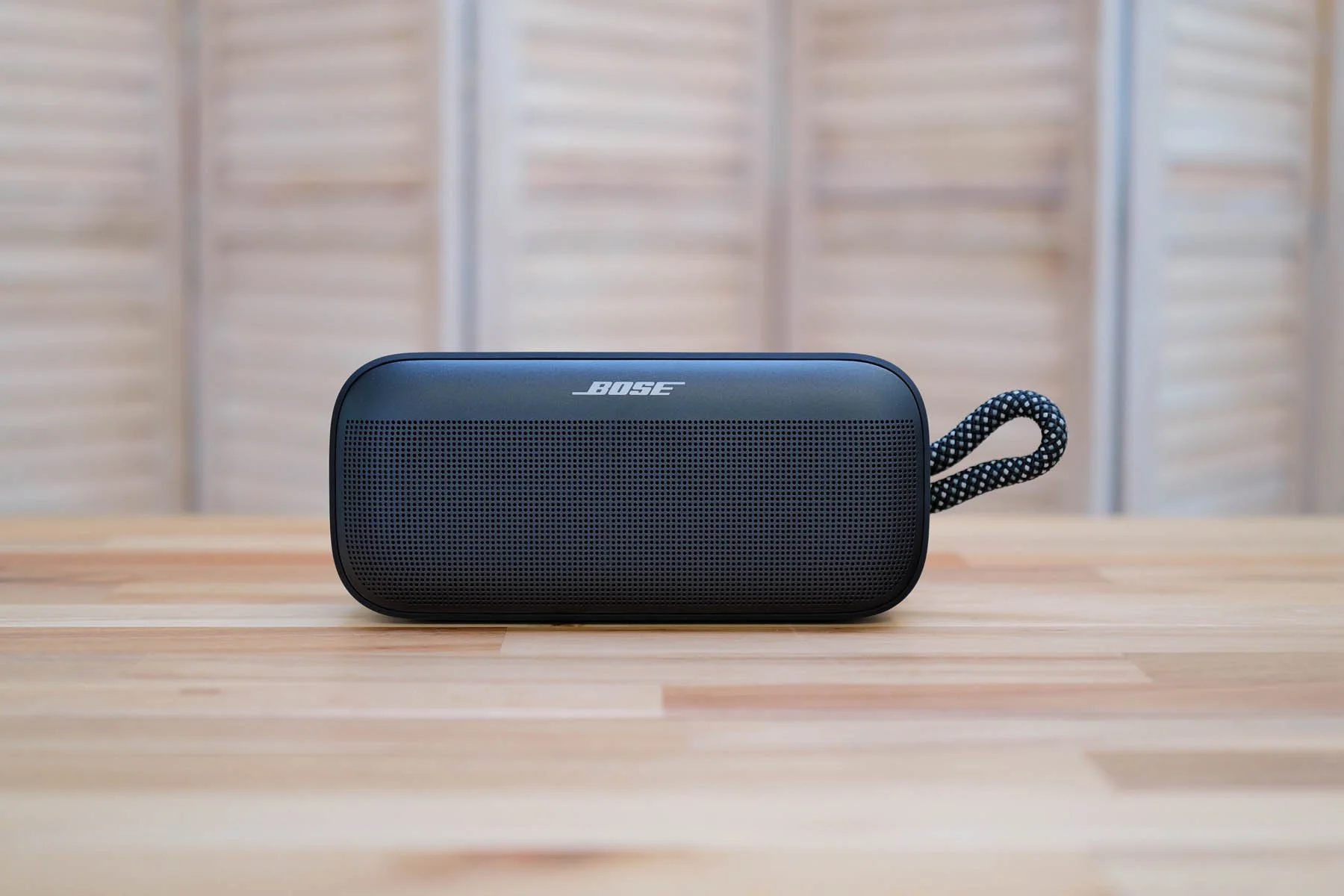
The four outer sides are wrapped in a silicone rubberized surround, which looks sleek, minimalist, and means it’s nice and grippy in the hand. The metal mesh front continues the sleek ‘thing’, and rigid, black plastic shell and grill in the rear lets all that good bass breathe.
It’s IP67 rated, so rain and sand aren’t going to be a problem. There’s a sturdy loop for clipping it to a backpack. Bluetooth 5.4 with a thirty-foot range. USB-C charging, which should be the bare minimum in this category but somehow still isn’t. Battery life is twenty hours, and the 0-100% charge time is about five hours, which feels reasonable for that kind of endurance.
There’s a Bose app if you want to tweak the EQ, but I’d honestly leave it alone. The stock tuning is so good as-is. You can also pair two units in Party Mode for stereo, if that’s your thing.
THE VERDICT
Two hundred and thirty dollars (at the time of writing) isn’t cheap. But if you’ve spent any time with a hundred-dollar speaker that treats your music’s mix like it’s optional, the SoundLink Plus will pleasantly shock you. The gap in quality between this and the JBLs I tried is hard to overstate.
It’s waterproof, the battery lasts twenty hours, it charges over USB-C, and the build quality is excellent. All good things. But they’re not why I’m recommending it. I’m recommending it because it sounds like music. Actual, balanced, listen-all-afternoon music. And after the week I had trying to find that, I don’t take it for granted.
At its MSRP of $279 it’s a good buy. If Amazon is selling it for less, it’s a downright bargain.
SPECS
Dimensions: 4.114” H × 11.169” W × 3.402” D
Weight: 3.373 lb
Battery Life: 20 hours
Charge Time: 5 hours
Charging Interface: USB-C In/Out
Bluetooth Version: 5.4
Bluetooth Range: 30 ft
Water Resistance: IP67
Materials: Silicone, Polycarbonate, Steel, Nylon
Sound Options: Party Mode (Two Speakers)
Microphone: None
App Support: Bose App